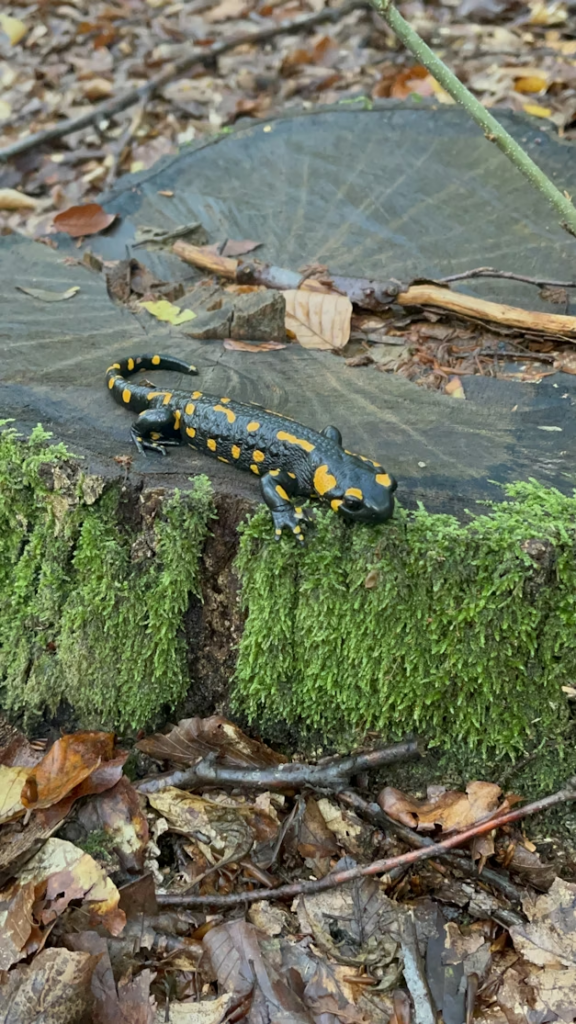
In the “Collateral Damage” chapter of Braiding Sweetgrass, it is clear that Robin Wall Kimmerer truly loves salamanders. I don’t think she has such a strong urge to rescue them from the road because she is a biologist, but because these tiny critters are her neighbours and friends. The way I interpret it, the title of “biologist” entails the responsibility of knowing and maintaining objectivity, not the obligation to protect other beings. Something that popped into my mind today is that sometimes, subjectivity in biology is acceptable- except we don’t call medical doctors “biologists”, because in western science, the human body is separate from the rest of the natural world (for some reason). Doctors are encouraged to have empathy for their patients, and there is evidence that empathy training leads to positive outcomes for everyone involved in healthcare systems. Canadian doctors typically agree to uphold the standards of care and ethical principles outlined in the Declaration of Geneva, a pledge inspired by the hippocratic oath.

I wonder if taking a perspective similar to that of a medical doctor could be a positive thing for western science. What if we taught students that it is ok to ascribe feelings to animals and plants, that the only tricky part is that we may not know what those feelings are? What might happen? Personally, I think students would develop more of an interest in science. I am starting to realize that social-emotional learning and BC’s elementary science curriculum could be a powerful team, and I would like to tie them together in future lessons.