Last week our class was introduced to a fun literacy activity called “story vines”, brought to us by a suggestion from Robin Bright’s text Sometimes Reading is Hard (2021). On page 92 Bright mentions the story vine tradition originating in Africa; if you happen to know where exactly this practice originated, please let me know so I can give credit where it’s due. A story vine is a textile braid with trinkets attached to it (in chronological order, top to bottom) that represent the characters, plot, and setting of a story. The idea is that after reading or listening to a story, you create a vine to help crystallize and represent your understanding. Then the vine is used to re-tell the story, each trinket reminding the sharer of the important details while they fill in the rest with their memory (and perhaps a pinch of imagination). Here is a CBC article that I enjoyed about how Winnipeg teachers are using story vines to support Indigenous oral storytelling practices, specifically Cree flood and creation Stories.
Below is a story vine I made based on Molly’s Tuxedo (Vicki Johnson, 2023). To create my vine, I read the book, made a braid of yarn, gathered materials that reminded me of the story, then re-read the book in chunks, pausing at each distinct moment or motif to create a trinket to represent it. This worked great for me, but when doing this activity with grade two and three students, a more structured approach worked best.
Book by Vicki Johnson, photo by GrahamBook by Vicki Johnson, photo and story vine by Graham
Yesterday, our class visited a local bookstore to celebrate Paper Bag Princess day by reading the story in groups to a grade 2/3 class, then helping them create story vines based on the book. It was an incredibly fun day full of googly eyes and feathers, and it was great to see students successfully brainstorming, sketching, and then building their story vines. Something I noticed is that the process of creating the braids was challenging for some students to the point where adults ended up creating their braids for them. If I brought this activity to my class I’d love to have a separate lesson on braiding, so students could take the time to struggle and then experience the reward of making a braid. I might even teach french knitting, then have students save their knit cords to use as story vine bases later. Here is a video tutorial on french knitting if you’re interested:
Pictured below is a Paper Bag Princess story vine created by a student who gave me permission to share their work. I had the honour of helping them craft some of their trinkets, and here’s what they told me about their story vine, in order from top down:
the peg doll wrapped in gold pipe cleaner is princess Elizabeth in her fancy clothes
the peg doll wrapped in green felt is prince Ronald, being carried away by the green foam dragon
the orange and yellow pipe cleaners and felt triangles are the flames from the dragon burning the green pompom forests
the peg doll wrapped in brown foam is Elizabeth wearing her paper bag
Book by Robert Munsch, photo by GrahamA Paper Bag Princess story vine, photo by Graham
Today, our class reunited with our grade 2/3 buddies at their school to watch them put their learning into action, using their story vines to retell The Paper bag Princess to their little buddies in kindergarten. This experience was truly more rewarding than I could have imagined! I watched as two buddies retold the story in careful detail, pointing to each trinket as they talked about what it represented. Even the buddy who seemed quite shy at first made meaningful and interesting contributions with his story vine, and from what I observed, I think it helped strengthen their storytelling confidence. I saw so much value in this activity that I would considering bringing it to a middle school classroom- I am thinking this could be an interesting way to represent timelines in social studies.
Here are the areas I saw students connecting to the B.C. English Language Arts Curriculum (grade 2 and grade 3) through both days of this learning experience:
Big Ideas:
Language and story can be a source of creativity and joy
Through listening and speaking, we connect with others and share our world
The political climate in North America is tense right now, and teachers are certainly feeling it. I mean, of course we are- if one purpose of education is to “create democratic citizens”, then I think we have an inherently political job, although this is interpreted differently by each person who works in education. I feel that my political responsibility as a teacher is to push for further justice when us teachers get comfortable with whatever new status quo we have established. I was reminded of this responsibility yesterday when my teacher presented this beautiful book to the class, Julián is a Mermaid (Jessica Love, 2018). When I read it, I saw parts of my own queer childhood reflected in a realistic and loving way. This book would’ve meant the world to me as a kid.
Julián is a Mermaid, image by The Giving Project for Children
When I got home I thought about how in different places and times, Julián is a Mermaid would not even be allowed to enter a classroom, despite providing such important messages and being a high-quality text. I felt grateful my teacher proudly recommended this book, and that my classmates were comfortable enough to enjoy it. This made me think, “Now that we’re comfortable with books like these, what do we need to open our minds and hearts to next? How can we challenge ourselves to include the realities of all our students, not just the realities that we see as normal?” I went searching for a high-quality children’s picture book that would push the boundaries of what my classmates and our provincial curriculum define as diversity and inclusion. I also chose to (cheekily) reference our course text Read Alouds For All Learners (Ness, 2024) by only referencing the title: who do we mean when we say all learners? Does this only extend to all reading abilities? Are we ready to include the realities relevant to all our students in the books we offer?
How Mamas Love Their Babies, picture from Amazon.com
After reading the Radish article “15 Picture Books to Start a Radical Bookshelf”, I chose to explore How Mamas Love Their Babies, written by Juniper Fitzgerald and illustrated by Elise Peterson. I chose this book because it was recommended by a Black queer children’s book author (Gwendolyn Wallace), it has high-quality illustrations and text, and it’s radically inclusive of all mamas, even ones us teachers pretend don’t exist. Watch Woke Kindergarten’s read aloud below to see what I mean.
Read-aloud of How Mamas Love Their Babies, by Woke Kindergarten
Now that you’ve watched it, you know that this book was made with love by two amazing mamas, to remind kids that each mama does something different to provide for their family, and each one is motivated by the same love for their kids. You know that this book depicts uncomfortable realities, like the fact that some mamas are in prison, that some mamas protest the government, that some mamas breastfeed and don’t hide their chests. You know that this book tells kids that mamas who fly airplanes and mamas who dance in heels all night are just as loving, caring, and deserving of respect as one another. I want to put books like this one in my classroom, but at the same time, I am wary.
B.C.’s school library book selection guidelines, in my opinion, could easily be argued as for or against this specific book. On top of that, there are a small number of details in the book that I think students would be better off without seeing (e.g. the neon signs), although it would not be hard for me to cover these details. But what message would it send if I censored the jobs of some mamas, but not others? Would that do similar damage to not representing those mamas at all? I am not sure. I was probably expected to give an answer or opinion in this blog post, but to me, reflections that help us grow bring more questions than answers. So here are three more high-quality, radical picture books that would truly diversify a teacher’s book shelf, ones that I have not seen in any library yet. I love them, but I don’t know if I would keep them in my classroom. Would you? Let’s talk about it!
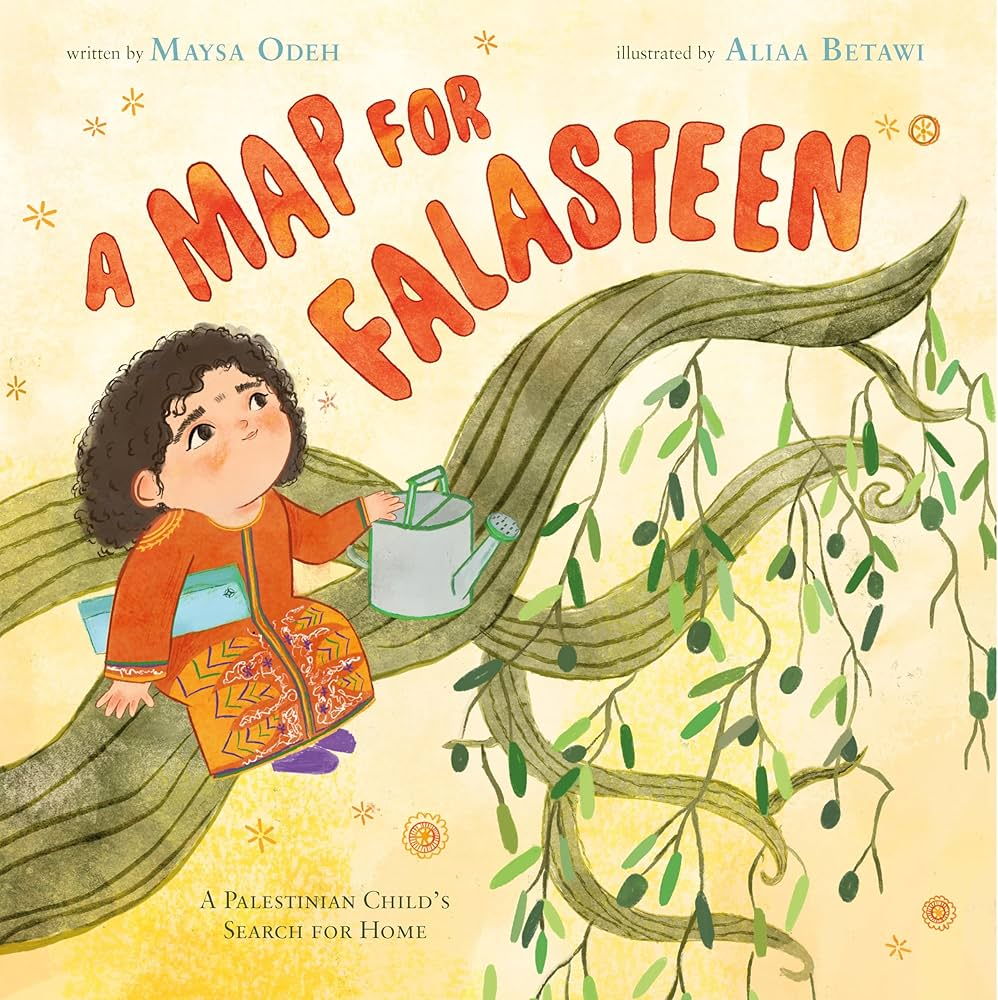
A Map for Falasteen, image by Amazon.comA is for Activist, image by Amazon.comAlphabet City Out On The Streets, image by Amazon.com
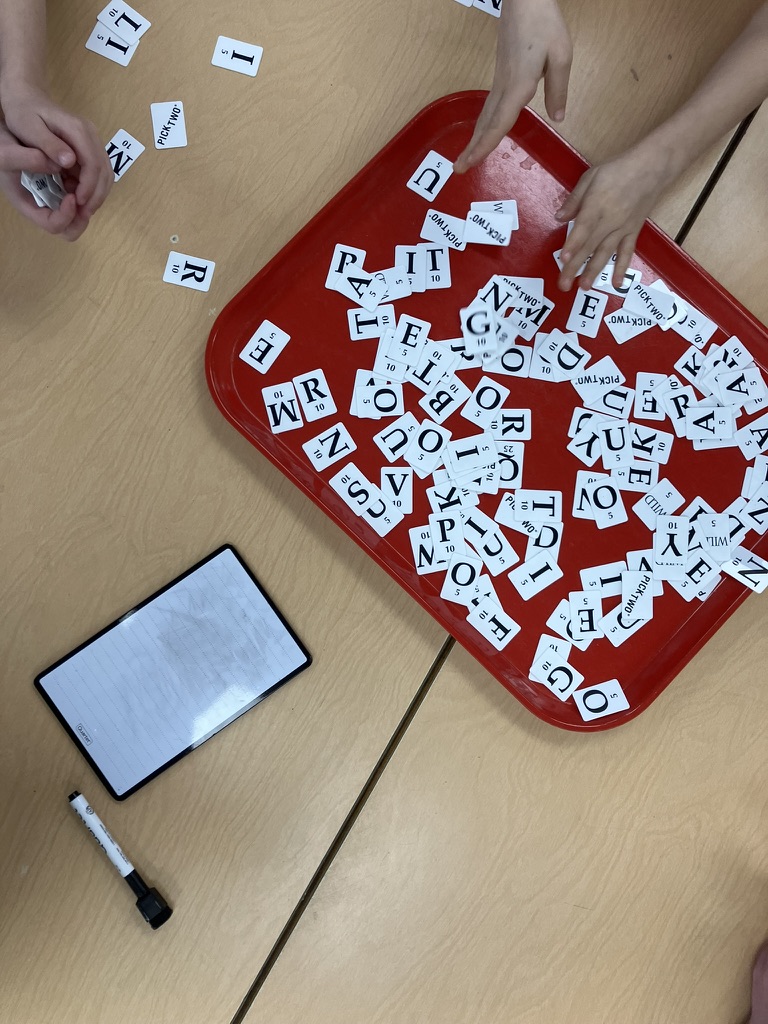
This week I visited a local kindergarten class, where I ran a ten-minute literacy station for groups of roughly six students each. This experience was great practice for me, but not necessarily for the reasons I expected going in! Coming off a week away from school, I was a bit mixed up about my schedule, and I had it in my head that I was visiting a grade 2/3 split classroom. So, I designed an activity with this age group in mind: having students create crosswords of familiar words from handfuls of letter tiles. I chose a set of all-capital letter tiles, hoping to provide some practice in capital letter recognition to offset the fact that students have most of their experience spelling with and reading sequences of lowercase letters. As soon as I arrived, I realized this activity would not be the right level of challenge for this age group. Out of curiosity I did briefly try introducing two-word crosswords to the first group, and they showed me what kind of literacy station I should pivot to- one that revolved around names.
Image by author
When the first group sat down at my station, I introduced myself again and asked for each student’s name. Nearly all students announced they wanted to spell their own names for their first letter tile word, but many quickly hit some speed bumps when they did not recognize the capital versions of the typically lowercase letters in their names. This task of spelling names using only capital letters seemed to be just the right amount of challenging, so I ran with this activity while encouraging students to experiment with a variety of words that they felt ready to spell. This way, I was able to connect to the B.C. Curriculum’s English Language Arts big idea “playing with language helps us discover how language works”. After spelling their own names, students spelled the names of family members, classmates, and their last names. Without any instruction on my part, students were connecting to another big idea, “through listening and speaking, we connect with others and share our world”.Then, I encouraged students to see what other words were “inside” their names (e.g., “My name is Teacher Graham, and I see the word “ham” at the end of my name”).
Image by author
Two students in the final group exemplified the big idea of “playing with language” in the photo above, when they collaborated to invent a new word (which, if your interested, we agreed is pronounced “duh-nuh-mo-ee-ah”) which we worked as a team to sound out. This exciting moment where students were thinking outside the box with language reminded me that some mistakes such as my grade mix-up are really happy accidents. If I had come with the correct activity, I wouldn’t have been so open to letting students teach me.
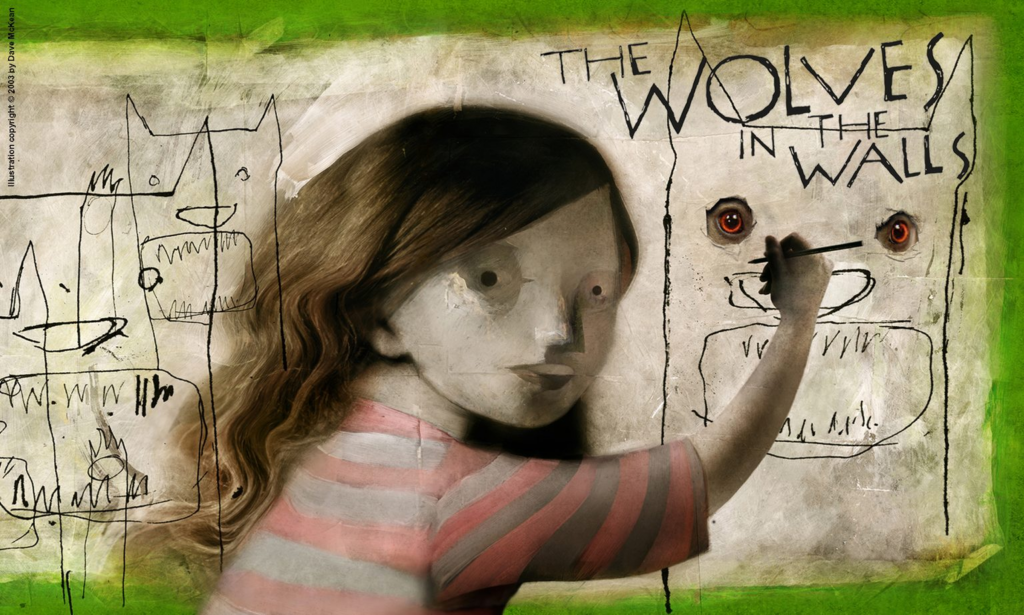
Wolves in the Walls cover art (by Dave McKean), image from Weekend Notes UK
This week my class had the opportunity to return our district’s resource centre/ technology lab twice. On our first day, we read Wolves in the Walls (Gaiman, 2003), and then in pairs, walked each other through the VR adaptation of the book (Fable Studio, 2020). I found navigating the VR experience to be challenging as I had only used VR once before, but it was also rewarding to be able to struggle a bit and figure it out (isn’t that what learning is all about anyways?). As you might imagine from the cover art, Wolves in the Walls is a charmingly creepy book, equal parts fun and eerie- much like Coraline, another one of Neil Gaiman’s books which was later adapted into a movie. Aside from the gothic atmosphere and Dave McKean’s gorgeous surreal illustrations, the Wolves in the Walls book just didn’t really resonate with me. I felt that there was great potential in the story to acknowledge the themes of ownership, reality vs. imagination, or security, but it turned out to be a missed opportunity. Regardless, I can understand why this book is a fun read for many students, and I do think I would have enjoyed it at that age purely for the suspense and excitement. After practicing independently, my feelings about the VR adaptation were very similar. In times like these, I need to curb my bias by referring back to Sometimes Reading is Hard (Bright, 2021). Below is a quote the author selected that perfectly applies to this situation.
“You know what the best book of the year was? … The one that a striving reader stuck with until the very end. The one that made a child ask for a sequel. The one that a child saw themself in. If a book was loved by one, it’s the best book!”
(Tanaka, 2020)
The following day, our class partnered with students from a local elementary school at the technology lab to explore this story together, through both physical and digital formats. First we divided the book into sections and set up “reading stations” throughout the school, in little nooks and storage closets to mimic the setting of the story. Students were put in groups, which cycled through each of the physical locations where teacher candidates would read their respective story sections. I thought this was such a fun idea, and I think it was quite successful! The length of this story meant that without those breaks to move and the novelty of hearing new reading styles, I don’t know if all students would have been able to sit through the full book. I will certainly be borrowing this unique storytelling method for my classroom one day, and I think it connected to the grade 6 English Language Arts big idea “Language and text can be a source of creativity and joy.” While students weren’t necessarily enacting this curricular competency, I think that we were modelling “Use and experiment with oral storytelling processes” to them.
Wolves in the Walls VR experience cover, image from Meta Quest
After the story session, students rotated through stations where they would either play the VR experience or work on a booklet of literacy activities based on the story. To me, the students seemed to be engaging with the core competency of communication (specifically the “acquiring and presenting information” facet). Since VR is so new to me I hadn’t given it much thought as a type of media that students may need to be “literate” in, but when I saw them navigating the story in this way I realized how different it was from consuming other digital media like videos. One thing I noticed is that nearly all students who were at the workbook station, even ones who had already completed the VR experience, were glued to the iPads where they watched classmates’ VR perspectives being broadcast in real time. Part of me was uncomfortable with seeing their attention so focused on an activity they were “not supposed” to be doing, but part of me thinks this is just another thing I need to learn about. Students seem to love watching other people play games, in livestreams or recordings, and that just might be something I can use to increase buy-in to a lesson one day. Who knows!
Wolves in the Walls VR experience screenshot, image by ProVideo Coalition
Cover of The Animal People Choose a Leader, photo by author
When I stepped into EDCI 402 on the first day of the semester, Bridget George’s beautiful illustrated cover for The Animal People Choose a Leader (Wagamese, 2024) instantly caught my eye. This high-quality storybook is now one of my favourites, and regardless of which grade I end up teaching, I’ll always keep this one in my classroom library. Before this semester I would not have imagined bringing a storybook to an intermediate classroom, much less teaching an effective and engaging lesson based on one. When I think about why that is, I recall my own elementary school experience, where picture books (particularly fiction ones) stopped being discussed or promoted after grade three. A combination of reading Read Alouds for All Learners (Ness, 2024), Sometimes Reading is Hard (Bright, 2021), and my recent in-situ experiences have shown me that it really doesn’t have to be this way. Below is the Read Aloud Planning Template (Ness, 2024) my classmate and I used to structure our three read aloud sessions in a grade six classroom, all based on The Animal People Choose a Leader of course. In between, you’ll find my notes on how the read alouds went, and what I would change going forward.
Text from The Animal People Choose a Leader, photo by author
I felt a bit uncertain heading into the first classroom session, but I left feeling confident. As I mentioned earlier, I didn’t know if a picture book would resonate with this age group, but it completely did. My classmate/teaching partner came up with some fun and engaging team building exercises for the students, and I could tell from their laughs and smiles that they had fun. One thing I would change if I could do it again is that before starting the book, I’d provide a bit more explicit teaching about the Ojibwe nations that the author and illustrator call home. I was worried about taking too much time, and realized afterwards that this would’ve been very worthwhile to spend a few more minutes on. This realization hit me after I finished telling the students where Ojibwe homelands are and received blank stares. A classmate later told me that some of her students last year had not understood the distinctions between Ktunaxa culture and other Indigenous cultures, and I pieced together that the class I worked with may not yet have a nationwide frame of reference for Indigenous peoples.
One thing I enjoyed about our second session with the grade sixes is that I got to see students shine who had been more reserved in the previous activities. I think this is partly due to the fact that my classmate and I were not strangers this time, but I also think the quieter nature of the activities helped. During the recap discussion and vocab preview, more students were making contributions to the discussion, and I could really see the gears in their brains turning. One thing I wish I had done differently in this otherwise great session is to more clearly explain the distinction between descriptive language and descriptive language that pertains to the setting of the story. Some students had written great notes to build their maps from, but many of their descriptive words included were more relevant to the characters or plot.
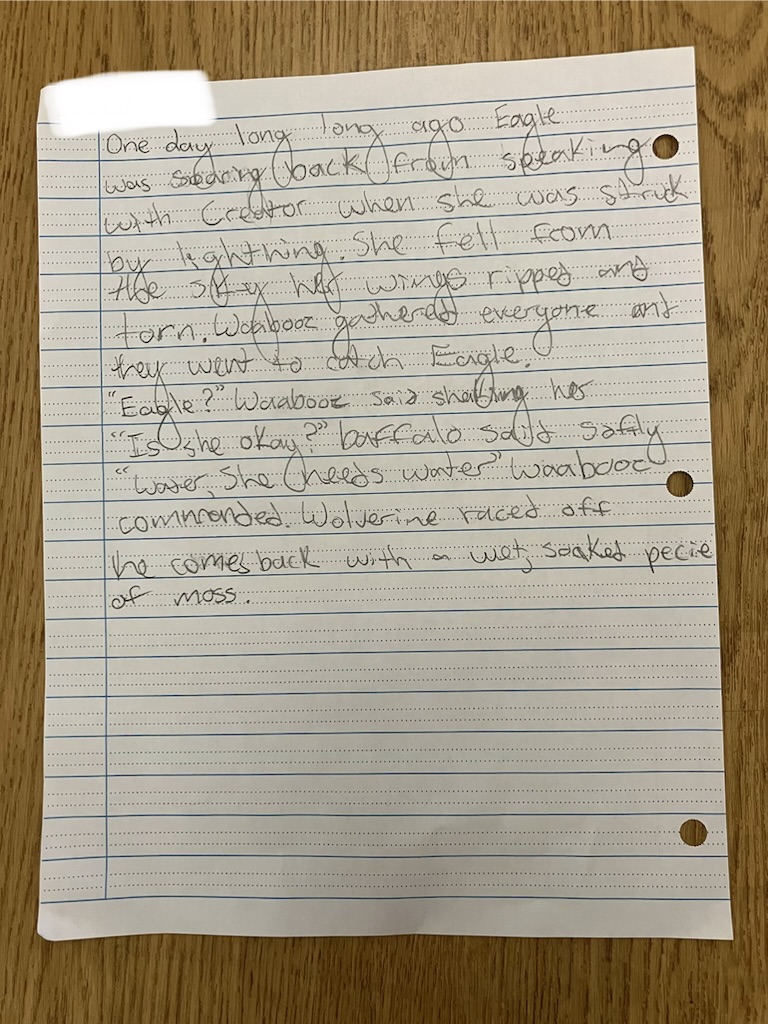
It was exciting to see the class’s understanding of the story really come together during the third and final session. At this point the student seemed to be at their most comfortable, eager to participate, and ready to learn. Although the brainstorming and the physical process of writing proved to be a challenge for a few students, with support from peers and adults everyone was able to demonstrate their learning and creativity. By the time the activity had wrapped up, nearly a third of the class wanted to come to the front to read their stories out! This made me feel like the activity was a success, because students felt proud of their work. Similarly to the previous session, one thing I would do differently next time is to make the instructions even more explicit for students. I think that providing students with instructions on paper or on the SmartBoard to refer back to after the teachers had discussed the activity might make the goals more clear to everyone as they developed their ideas. Below are some samples (used with enthusiastic student permission) of the stories the class came up with:
All in all, these three weeks were a wonderful learning experience for me and were very fun. I do hope that all future students in my program have this same opportunity, because I found it to be so valuable. Thank you to the students, teachers, and educational assistants who made this possible for us!
Wow, what a blast! I am so grateful that this month I was able to do a presentation (in drag!!!) at the Western Canadian Association for Student Teaching conference. This would not have happened without lots of support and encouragement from the manager, faculty lead, teachers, and my peers in the EKTEP program and at UVic- thank you so much! Another thank you for the audience who brought insightful questions and connections to create a great discussion afterwards.
My presentation is titled “Drag Queens Were Children Once”. Luckily, most of it is recorded (with a few missing bits) including some of the discussion that occurred afterwards. Below is:
-The recorded portions of the presentation, in order (filmed by Michelle Sartorel)
-The original essay, typed out
-The recorded portions of the discussion after the presentation (filmed by Michelle Sartorel)
My name is Graham Smith, and I live in ʔa·kisk̓aqǂiʔit, on ʔamakʔis Ktunaxa. I grew up on Lheidli T’enneh homelands in Prince George, around beautiful forests and rivers and wonderful people. Unfortunately, P.G. is also known for racism, a mascot that was once made from a septic tank (not kidding), and homophobia, although I don’t think I’d be much safer in even the most tolerant of cities. Us queer people from conservative regions have unique perspectives like that, ones I don’t think are heard often enough. So here’s one of my hot takes: I don’t think presenting traditional, western research has much power to change people’s minds about beliefs held in their hearts, beliefs like the idea that if students learn about people like me, they will become us and be worse off for it. But I’ve learned that stories can address conflicts like this one, and that sometimes the most undervalued forms of research are the most effective. Knowledge holders Juanita Eugene (Ktunaxa, ʔaq̓am) and Nasuʔkin Joe Pierre (Ktunaxa, ʔaq̓am) shared with me that when we teach through stories, the listener internalizes the morals that resonate with them as they’re prepared to understand each layer of meaning. Elder Alfred Joseph (Ktunaxa, ʔakisq̓nuk) taught me that infusing learning with humour is “like taking medicine with sugar”; it encourages listeners to open their minds and hearts to new ideas. Dr. Christopher Horsetheif (Ktunaxa) taught me that when teaching to bring two separate groups together, the learning must start with the set of commonalities between them. I also want to thank Dr. Shawn Wilson (Opaswayak Cree Nation) for his book Research is Ceremony, which helped me justify this way of sharing when, for reasons I’ll never get, people wanted me to show them bar graphs instead. Here is my story.
When I started kindergarten, I was quite the character. I loved to dance and perform for my parents but was often afraid of going to school. I wore a princess dress every day and cried if I had to wear cotton tights instead of silky ones. I wore only ballet flats, or in grade one, a pair of glitter cowgirl boots that lit up when I stomped. I was deeply offended if anyone called them cowboy boots and was not shy about correcting them: “I’m a cowgirl, not a cowboy!”. When I was five, my sister Jenny and I would ride a pony named Andy at the P.G. farmer’s market. We fought one day because I told her Andy was a boy, and I knew this was true because he had a penis. She exclaimed in horror, “Andy does NOT have a penis; he is a girl!”. Those are my earliest memories of gender. When I was six, I’d lie awake praying that my chest would stay flat forever, feeling sick with worry about my body changing a decade down the road. I’m not sure who I was praying to because I was raised agnostic, but it didn’t work- which is why I’m still agnostic. I had experienced nothing in life to tell me there was something “wrong” with growing up or being a girl; I loved the incredible women who were my family and friends. I wanted to be strong and smart and joyful like them, but I didn’t want to be one of them.
By grade three I’d exchanged my ballgowns for T-shirts with rhinestones, which I’d pick off and give to my friends. I started to get this funny feeling occasionally, like disgust and embarrassment and one drop of sad mixed and diluted. It would strike when my teacher separated us into girls’ and boy’s teams in gym, or when someone called me “miss”. I felt that strange feeling when I thought too long about why I’d never be allowed in the boys’ bathroom. I preferred to be camping with my family where there were no girl’s and boy’s bathrooms, just bushes. There are still tiny moments when I have more in common with the rednecks I grew up around than other queer people in large urban centers, like when I tell a joke about being trans and the only laugh comes from the right-winger who isn’t worried about offending me. But the more I became myself, the less many of them seemed to love me. And the more some “country folks” started to treat me differently, the harder I found it to love them.
One day in grade four, I was overwhelmed by the strange sad feeling, mixed with anger. A boy I sat beside had been kicking my chair every lunchtime, and he made me scared. My mum came with me to talk to my teacher, who said “Boys just do this to girls when they think they’re cute. I won’t need to move your desk”. I cried angry tears as we walked home. In grade five, I started to dread growing up even more. I felt nauseous when I thought about having a period or getting pregnant one day. School taught me that there are only males and females, and when they are twenty-five or so they marry and have 2.5 kids, though I’m still not sure how that works (where is the other half of the kid?). I wanted this life because it was normal, and I wanted to be normal. At the same time, I didn’t want it at all. Looking back, I understand why I didn’t know who I was in elementary and high school. It’s because sexism punishes you for being a girl and transphobia punishes you harder for failing at being one. Transphobia also makes sure that people like me are a secret, not taught or talked about in schools, because acknowledging us would make us real. I didn’t know these things in my head yet, but I could already sense they were simply the rules.
In grade six, I was working in the hallway while two boys talked beside me. One said something and I responded. He pointed at me and said, “I don’t even know what it is doing here”. It felt like he knew I wasn’t a real girl, and while I was humiliated, it was strangely freeing to be seen. In grade seven, my first real sex-ed ensured I had no clue that anything I learned applied to queer people. My teacher was amazing for the time- she used the proper terms for anatomy and answered every question she could without judgement. She even mentioned that intersex people exist, and it was the first time anyone outside the male-female binary had been mentioned in my eight years of school. Two of my classmates shouted in disgust, and my teacher gave them the look- you know, the teacher look. That day, I learned that there were other possibilities for bodies and genders, and those possibilities were disgusting to my peers. Queer people making safer choices with sex, even having relationships, was entirely absent from that lesson, or any sex education I had until grade ten. Even then, we were never more than an afterthought. In the changerooms for gym in grade eight, I felt like an intruder, like someone would see through my girl disguise and kick me out. But there was no “right” place to get changed. In grade nine, I knew I liked girls, and it felt like everyone must be able to tell. So, I changed alone in the bathroom stalls while everyone chatted by the lockers.
I was struggling academically and with my mental health, so I did most of grades eight and nine in an alternative program. When I returned to high school full time in grade ten, my life started coming back together, and I had the self-confidence to somewhat soothe my fear of not belonging. I came out as bisexual, which was fifty percent wrong, but an honourable attempt for a teen who based their self-worth on the approval of boys. I even found a feminine guy to date, which helped me fit in while still being a bit gay. I had two teachers who made their classrooms a refuge, and an incredibly thoughtful librarian who stocked the shelves with books about people like me. In grade twelve, I had a teacher who shared that he had a nonbinary partner who was a surgeon. It was the first time I had heard about a nonbinary person living within fifty kilometres of me, much less one in a highly respected career. I rode the bus home smiling that day. In his class, I “discovered” that homophobia and transphobia were not a requirement in all cultures, as I’d always assumed. I say “discovered” in the way that Cartier “discovered” Canada- it was always there, and I realized it millennia after Indigenous people did. Despite these teachers, there was much I did not know, and many questions I thought I had nobody to ask. When my first partner began to cross my boundaries, I assumed it was just another mystery of queer relationships that nobody could teach me about, and I accepted it. I’m still dealing with the repercussions today.
I spent my first year of university at home during COVID, and because I had a healthy family with secure jobs, it wasn’t that bad. I spent hours outside, returning with spruce needles in my sweater and leaving dirt on my bed from climbing in my garden-level window. I adored my biology classes, where I learned that nature was not always straight, not always male and female, the way I had been taught as a kid. In my health sciences and Indigenous studies classes, I learned more about the ways people like me had always been around , and I wondered why so few teachers had told me about us. I learned about this thing called “Drag Queen Story Hour”, and I told my mum that when I was a teacher, I’d wear magical outfits like that to make my students excited to read. I remembered that I had been a drag queen since the first stomp of my light-up cowgirl boots, but in that moment, she had forgotten. Her face pulled back in discomfort, and she walked away. I began to cut my own hair and dress how I wanted, because at home there were no bathroom stalls scribbled with slurs, nobody to cast strange looks or whisper and point as I walked by. I now understood that there would be room for me in this world if I was not man or a woman, even if I would not be welcome everywhere. I finally came out as nonbinary, to which my youngest sister said “yeah, obviously” with a loving smile. I started to feel like myself, and to truly like myself in a way that I hadn’t experienced. For the first time, I was certain my family loved the real me. I could imagine being a parent one day, getting old, and being a good relative. I decided to become an elementary teacher, because I have always loved learning and creating. But changing my role within elementary schools has not fixed my experiences in them.
The year I moved to ʔa·kisk̓aqǂiʔit, I walked down the hallway of my college and looked at graduation pictures of teacher candidates from past decades. Aside from some questionable haircuts during the eighties, I did not see anyone who looked like me, and my confidence crumbled. But two years ago, I looked again and found someone. As I got to know them better, I learned they had to fight to get a picture in that hallway, and they had awful experiences working in a local school after graduating. Parents had called and emailed the principal, even coming into the office to declare their fear and disgust at this new teacher who dared to tell their students what pronouns to call them. Parents said they had exposed their students to “sexually explicit material”, and the harassment continued all year. Even before I heard this, there was not a single time I entered a school without wondering if someone would harass me too.
Every time a student asked me if I was a boy or a girl, I thought of how my words could result in a parent shouting at me, just like people shout at my girlfriend and I for holding hands in public. I thought of the angry mother who followed me out of the public pool to tell me I would “probably commit suicide” because I was trans. I could tell she had read statistics about us removed from the context of our stories. Our stories where our lives are cut short because of transphobia, not because we are trans. Thankfully, my first practicum at a Ktunaxa independent school helped me stand taller. Elders, teachers, and students showed me that I belonged, even if I was as white as a polar bear and queerer than a three-dollar-bill. I think of the Ktunaxa students and teachers who have been told they do not belong, in public schools built on their own homelands, and right in my teaching program. I’m impressed by the graciousness to still welcome people like me, because in my culture, we’ve forgotten how to take care of each other like that. I guess we were too busy running “schools” like Assiniboia, like St. Eugene’s, where we enforced strict gender segregation so that brothers and sisters would not know or love each other.
As I approach my second practicum at a new school, I have the joy of hearing students pass me in the hallway and say, “hey teacher Graham!”, or “sick mullet!”, and I imagine having a long and fulfilling career. A student asked me why my voice sounds different than it did last year, and I told her “It just changed a bit”- without it shaking, without any complaints or questions. When students see me, they gather evidence that we all deserve to be here. But it is not my job to decide when you are ready for evidence that people like me belong in this profession, and that our realities belong in the curriculum and the classroom as much as anybody else’s do. What I can tell you is who I am, and if you become curious, you will find the evidence you need. To anyone in the audience who hopes their kids never have a trans teacher like me, I think that’s just too bad, and I love you anyways. We still use the same “genderless bathroom” when we’re hunting, even if you think I’ll ruin your kids by advocating for bathrooms they feel comfortable in, for changerooms where they don’t hide themselves out of fear. I hope us queer teachers will still be here when you’re ready to love us. It may be hard at first, but both our lives will become easier when you can embrace me. If there is one thing I can leave you with, it’s this undeniable truth: some of the students you teach will grow up to be drag queens, and whether you hate us or love us, all drag queens were children once.
Live discussion clips:
1. Discussion about understanding of queerness in the Caribbean vs. Canada2. Discussion about understanding of queerness in the Caribbean vs. Canada3. Discussion about understanding of queerness in the Caribbean vs. Canada4. Discussion about understanding of queerness in the Caribbean vs. Canada5. Discussion about the term “queer” in different parts of Canada6. Discussion about teachers finding acceptance for themselves7. Discussion about teachers finding acceptance for themselves8. Thank you
Thank you for listening or watching! I hope my story connected with you.
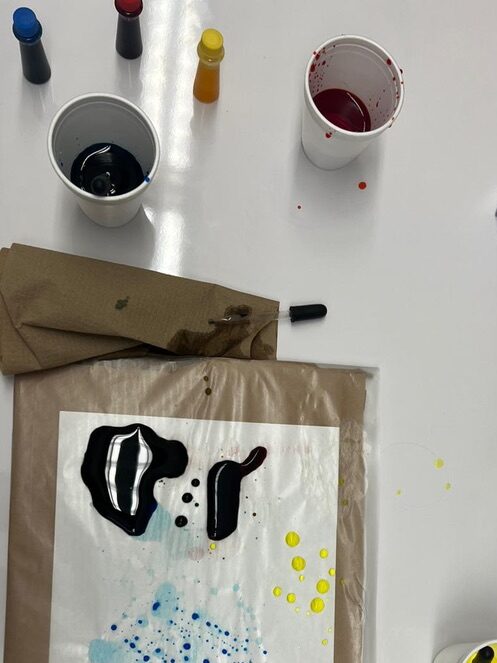
This week, our science class tried several fun and engaging activities involving colour mixing and surface tension. These activities were so fun, in fact, that I forgot to take pictures of them because I was so immersed! Thankfully my classmates did the job for me and were kind enough to share, so I can show you what we got up to. I will also be writing out simple instructions as I would like to bring the first activity into the classroom one day and will need reminders of the process.
Image credit: Anonymous EKTEP student
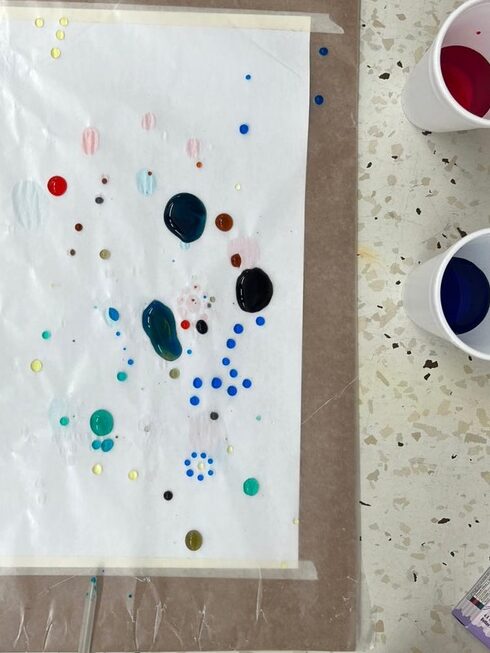
For the first activity, we mixed up three small cups of water and food dye to represent the primary colours, and had one pipette for each cup. We took a piece of cardboard with a blank white paper taped on top (to provide a clearer view of the colours that would be placed on top later), and covered it with wax paper which was taped to the underside of the cardboard. In groups of three, we experimented with placing droplets of colour water on top of the wax paper, as we were encouraged to do. Our instructor prompted us to investigate how many water drops could be put together in one “puddle” on the wax paper before it split into two. As we tried this, we naturally began mixing colours and created a rainbow using secondary colours, and soon were creating tertiary colours as well. This was a seemingly simple play activity, but my group organically started noticing many interesting phenomena on our own in the way the droplets behaved.
Some of our observations were:
Some of the colours mix more fluidly inside a two-colour droplet than others
Despite having equal amounts of dye in each cup, some of the coloured droplets are able to let more light pass through than others
Even the smallest bump or fold in the wax paper will dramatically shape the puddles of water that are created
Individual droplets can often stay put, while bigger puddles flow more quickly to the lowest point
The yellow dyed water has a very fluorescent quality, unlike any of the other colours
The wax paper mostly resists the water, but it can still be stained by the dyes in the droplets
Droplets that are placed close enough together will combine into one bigger droplet
Droplets and puddles always have a rounded shape on top and on the edges where the water meets the surface
Image credit: Anonymous EKTEP student
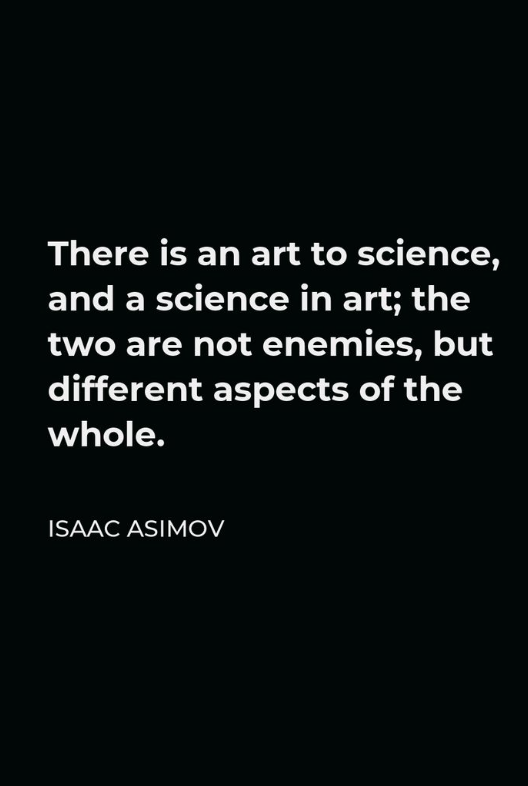
I was pleasantly surprised at how many observations about the properties of water and of colour happened in those few unstructured minutes of play. The most exciting thing this time reminded me of was how intertwined art and science are. I have always loved both, but rarely have had teachers recognize what the two “separate disciplines” have in common. When I reflect on the list above of observations, I can not tell you which ones are “artistic” or “scientific”: they are all fully both. When I think about the quote from Isaac Asimov at the top of the post, it reminds me of a podcast episode (yes, another podcast) I was listening to yesterday from NDN Science Show (created by Annie Sorrell and Loga Fixico) about the differences and the overlaps between Indigenous approaches to science and western approaches to science. Stay tuned for the next post, where I will tell you more about that!
“In all affairs it’s a healthy thing now and then to hang a question mark on the things you have long taken for granted”
-Bertrand Russell
Teacher Identity
What does it mean to be ‘effective’?
I feel that to be effective as a teacher is to strike a balance of delivering the highest quality of learning for the most students, while not spreading yourself too thin. I have a suspicion (held by others, as you’ll see in this BBC article) that in women-majority careers like teaching, extra unpaid labour is an expectation- not just of women, but of all teachers to varying degrees. I imagine this contributes to the high rate of burnout and of leaving the profession, and I’m sure we can all agree that a burnt out teacher (or one who has left teaching to become a dentist) is no longer an effective teacher. I firmly believe that effective teachers set boundaries and put themselves first so they have more to give.
What characteristics does an effective teacher have?
Effective teachers are self-confident, because they prepare in advance and remain flexible when change arrives. They are also self-confident because they know that even if things “go wrong” in the classroom, they are capable of remediating it. This is because they have strong subject matter knowledge in what they teach, and strong interpersonal skills. This confidence allows students to have trusting relationships with teachers, and those trusting relationships let teachers do their job more effectively. Effective teachers are so many other things too: gentle, fair, respectful, attentive, honest, caring, humble, reflexive, open-minded, loving, creative, resourceful, hard-working, and dedicated. I think that for elementary and middle school teachers in particular, a key ingredient to effectiveness is being fun and being able to have a laugh. And last of all, an effective teacher is someone who knows you can’t pour from an empty cup.
What kind of teacher do I want to become?
I want to become a teacher that is kind, that takes good care of myself and my community, and as I’ve decided most recently, a teacher that is fully myself. That last one may sound odd, aren’t I already “myself”? What I mean by this is that I do not want to have a professional identity that doesn’t represent who I really am. Because I am a nonbinary person, sometimes I feel uncertain about how to present myself in schools. What do I wear? How do I introduce myself? What do I say when students ask me what my pronouns are or why I “look like a boy”? I used to be afraid to answer these questions, and would spend so long getting dressed for in-situs for fear of looking “too unconventional”. I am finding ways to balance these anxieties with the knowledge that if a school can not support me being who I am, it is not a school I am meant to teach at. In other words, I want to be confident in myself.
What do I need to learn to become an effective teacher?
I need to learn to develop a work-life balance, especially since I have struggled with this in the past. I also believe classroom management strategies will be crucial, particularly the ones learned and practiced through experience. I will need to learn strategies to support EAL (English as an Additional Language) learners, and to adapt day plans or lesson plans on short notice.
What are my beliefs about teaching (my teaching philosophy)?
I believe teachers have to be strong leaders, as they have the responsibility of cultivating safe, loving, and informed communities. This includes being positive role models, supporting fellow teachers, protecting students from harm, and helping students develop the tools necessary to live the lives they wish. I think teachers must be committed to curiosity, which means not just accepting new information, but actively seeking to understand the world and to learn and share truths.
Reflection
What is a worldview?
I think of each person’s worldview as the set of their answers to the “big questions” in life (which of these questions are asked can differ depending on one’s worldview, so perhaps my definition needs some work). Some examples of what I believe to be the “big questions” are: “What is your purpose in life?” “How did the universe come to be?” “What happens after you die?” “What is right and wrong?” “What is normal?” “Who is most important in the world, and in what order?” and “How can we determine what is true?”.
How would you describe your worldview?
I would partly describe my worldview by sharing things are very important to me: Indigenous sovereignty and Indigenous rights, antiracism, women’s rights, disability justice, queer rights, and environmentalism. I carry these ideas with me when I make decisions about spending money, voting, choosing words, and traveling; They affect my decisions and perspectives even when I am not consciously thinking about them, although it was not always that way. The layers of my worldview that I see as more inherent are European/settler Canadian, colonial, agnostic, spiritual, and politically left-wing.
While thinking about your own worldview, also consider the impacts of your ethnocultural, socioeconomic, geopolitical and spiritual identities.
I am a white person who is descended from Irish and Scottish colonizers. I was raised by a loving, middle-class, white family who identifies mostly with “Canadian” culture, although we feel slightly connected to Irish and Scottish cultures too. Because of this, I turn to history and folklore (rather than religion) for spiritual answers, and being a good host with a tidy home and sense of humour is important to me. My grandparents have taught me that we value hard work, financial independence, formal education, and toughness through difficult times. I grew up in a suburb surrounded by people with very similar identities and upbringings to me, so I inaccurately view myself as the “default” much of the time.
Why, as a teacher, is it important to be aware of your own worldview, as well as those of your students and school community?
It is essential for me to be aware of my own worldview because it affects what material I choose to teach, when and how I teach it, who I choose to learn from, who I include my classroom, and how I carry myself. In my school community, every person deserves to feel understood and respected, and understanding and respecting their worldviews demonstrates that.
What can you do, as a teacher, to ensure that your worldview does not impede the success of the diversity of learners in your classroom?
To do this, I can choose to honour the responsibility of being a lifelong learner every day, by remaining curious and always being prepared to change. I can read, listen, and watch media and have conversations to advance my understanding of others’ worldviews, and I can do the same to examine the parts of my own worldview that I am blind to or accept as the norm.
When do you consider it to be necessary to challenge the western worldview as it impacts the K-12 education system?
I consider this to be necessary every day, in every subject, and in how I carry myself as a teacher both in and out of work.
What aspects of the BC curriculum reinforce or challenge a western worldview?
An overarching aspect of the BC curriculum that is very western is the fact that each subject is divided into a separate category, and each grade is separate as well. Another is that English and French are prioritized, while languages that are not European in origin only become available in grade five. Indigenous languages are virtually non-existent in the curriculum. The Applied Design, Skills, and Technology curriculum reinforces capitalist (typically western) values as well. I see that there are many areas where Indigenous topics, knowledge, and subject matter are included or even inform the broader curriculum design, but I do not feel that it is actually challenging the western worldview. I think it is more of a tiny nudge, hopefully one in a series of many potentially bigger nudges.
When I was a little kid, I had the privilege of a stay-at-home mum who was very crafty. She would set up something called “science day” for my sisters and I every once in a while, and we absolutely loved it. “Science days” looked something like this: a kitchen floor covered in an old bedsheet, topped with a box of food dyes, baking soda, vinegar, straws, dish soap, cornstarch, a very large orange plastic bowl, some baking trays, and spoons. We would stir, squish, and spill until we had created some new toxic waste for my mum to clean up, but it really was meaningful. I still remember the perplexing texture of cornstarch with water, the sizzling sound of baking soda and vinegar, and the way one drop of red would turn dough pink. Because I had such rich experiences where I was able to freely explore, I was disappointed and confused when I did “real science” in school, and exploring (for the most part) was no longer allowed.
Image taken by myself, 2025
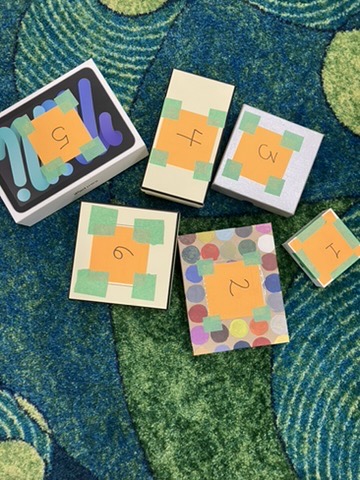
This is why I was thrilled when my elementary science instructor pulled out a set of mysterious boxes for us to investigate, as our students would, using our senses. The goal was to make predictions about the contents, the only rule was “don’t open the box”. I had almost forgotten that “real science” could be playful, imaginative, and creative. On top of that, I think this exercise perfectly embodies universal design for learning. Any student could participate in making predictions, because the task is so open, there are as many ways to study the object as one could dream up. Throughout my class, I noticed people shaking, sliding, weighing, listening to, and even smelling the boxes to collect data on the contents- these strategies probably just scratch the surface of what kids could come up with if they were presented with this activity.
When I came home from class, I compared this activity against the BC science curriculum, as I was wondering what age range it would be most applicable to. To me it seems most relevant in kindergarten, when matter is first being explored, but I can imagine it being adapted across several grades when studying Earth sciences and botany. For example, I could see the boxes being filled with a variety of substrates, such as sand, shale, clay, peat, soil, and silt, and students devising tests to determine their contents. I will be teaching Earth sciences this spring during practicum, and am considering how I can find similarly hands-on and open tasks where students can let their natural curiosity guide them. My childhood self that loved “science days” so much would be thrilled to see science instruction moving in this exciting new direction.
This semester, I’ll be documenting my learning through the course Reading Instructional Principles and Strategies on this blog. This week, I’ll be responding to this reading interest survey, taken and adapted from the textbook Sometimes Reading is Hard by Robin Bright (2021) with an emphasis on the first question (I am so excited to talk about fairies!).
Describe your ‘one book’ that changed everything for you as a reader.
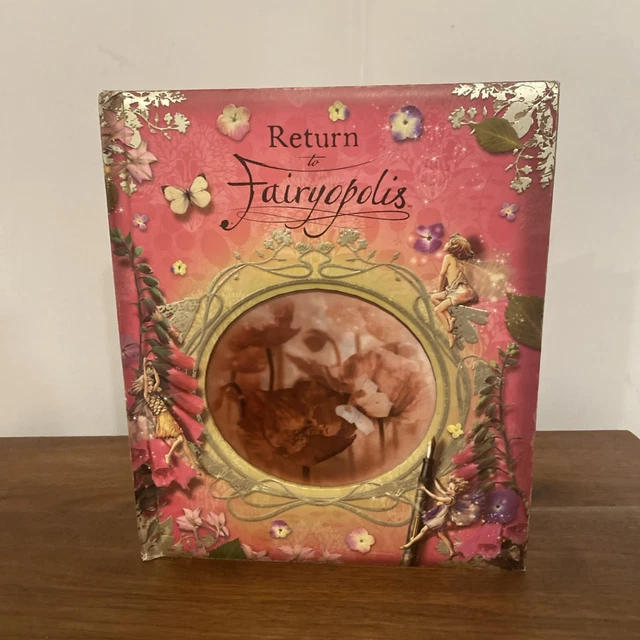
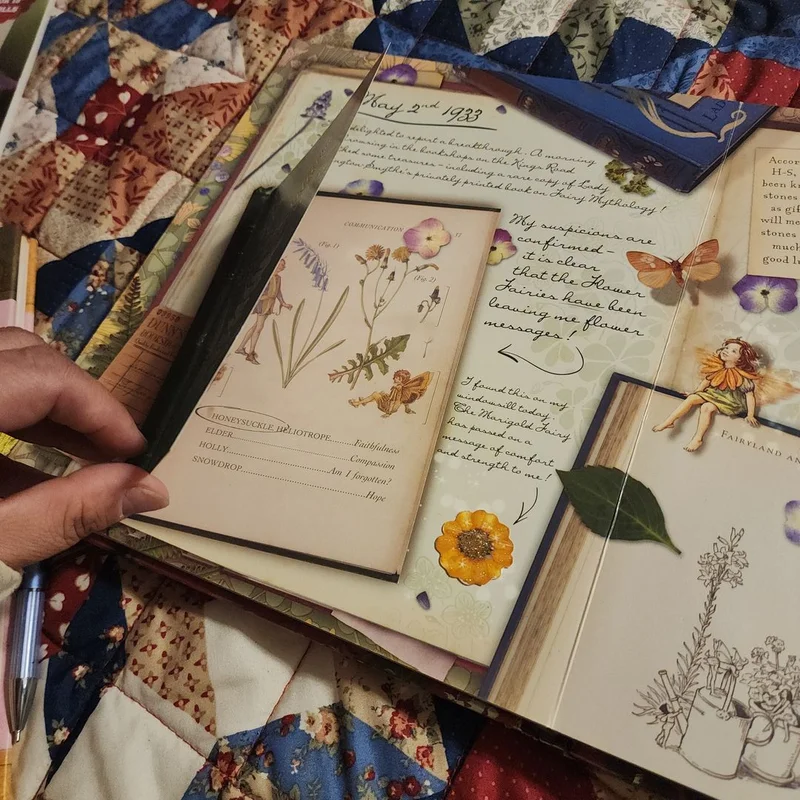
My ‘one book’ was Return to Fairyopolis (Cicely Mary Barker), gifted to me by my parents when I was about six. I was a very reluctant reader (to put it gently); I remember howling in anguish and crying when I was asked to practice reading aloud at home, even shutting myself in my room and holding the door closed once or twice. I was bursting with energy and creativity, and I did not want to waste my precious time on reading when I could be making art, exploring, or playing pretend. For those reasons, this book was exactly what I needed. I loved it so much because it engaged my senses and emotions in a way that traditional books rarely did. The front cover had an insert that revealed a hidden image when turned from side to side, encouraging me to pick up the book to begin with. It featured beautifully detailed illustrations of fairies dancing across the pages, leaving textured glitter behind as they flew. Many pages included interactive elements, such as tiny doors, pressed flower petals to be lifted, envelopes to be opened, and strings to be untied, revealing letters inside which I would read before tucking away.
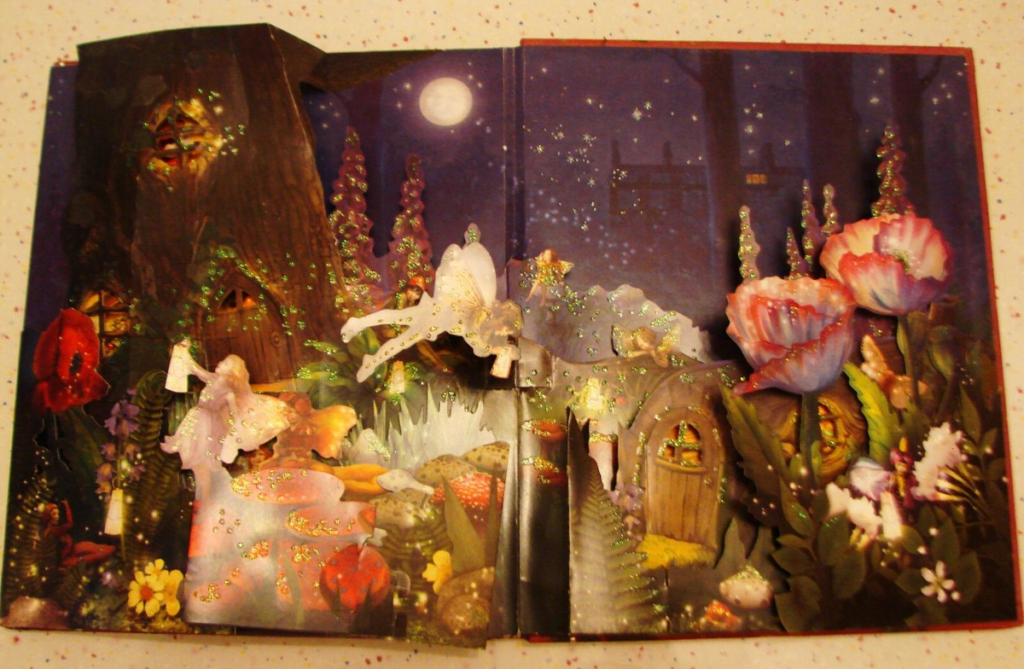
This epistolary book blurred the lines between text and illustration, placing the illustrations woven between, even interacting with, the elegant handwritten text. This sparked my curiosity, inviting me to make the jump from using images to guess at words to truly decoding. Even though some of the words used were far too challenging for me, or were written in scripts that were hard to read, I genuinely wanted to understand them because real fairies had left them behind as clues for me. The scrapbook-style pages spotted with ink, tea cup circles, and pressed leaves reinforced the effect that the text wasn’t just an explanation of the illustrations, it was part of them and they were both needed to understand the story. The final page revealed a pop-up world of fairies, complete with enchanting music that played from a small battery in the back cover. This made the work of decoding the text incredibly rewarding, and kept me re-reading it, understanding more layers of meaning as my patient parents helped me with the words. I still had a brief period of reading struggles after discovering this book, but it has always stayed in my heart, reminding me of how magical books can be when you invest your time in understanding them.
How do you feel about reading? Tell me about it.
I have very positive feelings about reading. It is something that I have felt confident in doing since the end of my grade three reading tantrums, and I particularly enjoy reading out loud to others. I find reading fun and relaxing, and some of my favourite moments in life are when I get the time to read in the forest in my hammock. I even enjoy reading most of my textbooks! Aside from personal enjoyment, I feel positively about reading, because it can be a low-cost, high reward activity for people of all ages. The unfortunate part is that I am quite a busy person, and I do not often make time to read.
What types of books do you like to read?
I usually read expository or creative non-fiction books, but I also enjoy fiction sometimes. I do enjoy browsable books as well, and graphic novels or art collections.
List some hobbies and things you like to do outside of school.
I enjoy fashion and interior design; I am always at the thrift store looking for treasures to add to my closet or walls. I love to be outside, biking, swimming in lakes, or hunting for rocks and gems. I dance and make art, and I always hope to do both of those more. Most recently, I’ve been having lots of fun learning to do drag makeup.
Who are your favourite authors?
For how little I read, I have a relatively long list: Edward Gorey, Ibram X. Kendi, Robin Wall Kimmerer, Billy Ray Belcourt, Layla Saad, and Shaun Tan.
Tell me a bit about the last book you read that you really enjoyed.
I am currently working through The Body Keeps the Score by Dr. Bessel Van Der Kolk. Some parts I find difficult to read as they are quite emotionally intense, but it is very informative and helpful to my work as a teacher.
Tell me a bit about what you have been doing since last semester during your winter break. How have you been spending your time?
During the winter break, I visited my family and friends which was wonderful. Since coming home, I have spent most of my time doing schoolwork and working at my job. I am really looking forward to when I have time to do other things too. I have also been outside quite a bit (perhaps the reason for my never ending cold).
What subjects or topics do you like learning about?
I like learning about so many different things: fashion and fashion history, ethnobotany, Ktunaxa language and culture, visual arts, current events, Celtic fairytales, deep sea creatures, rocks and gems, astronomy, just about everything!
If you could read a book about one thing, what would that be?
Chinatown Pretty: Fashion and Wisdom from Chinatown’s Most Stylish Seniors (Andria Lo and Valerie Luu) is one of my favourites. I would absolutely love to find a similar book if it is out there, but if not, I will just hope to find it again one day to re-read. Below is a video where Andria and Valerie explain this gem of a book:
Chinatown Pretty by Andria Lo and Valerie Luu, Chronicle Books