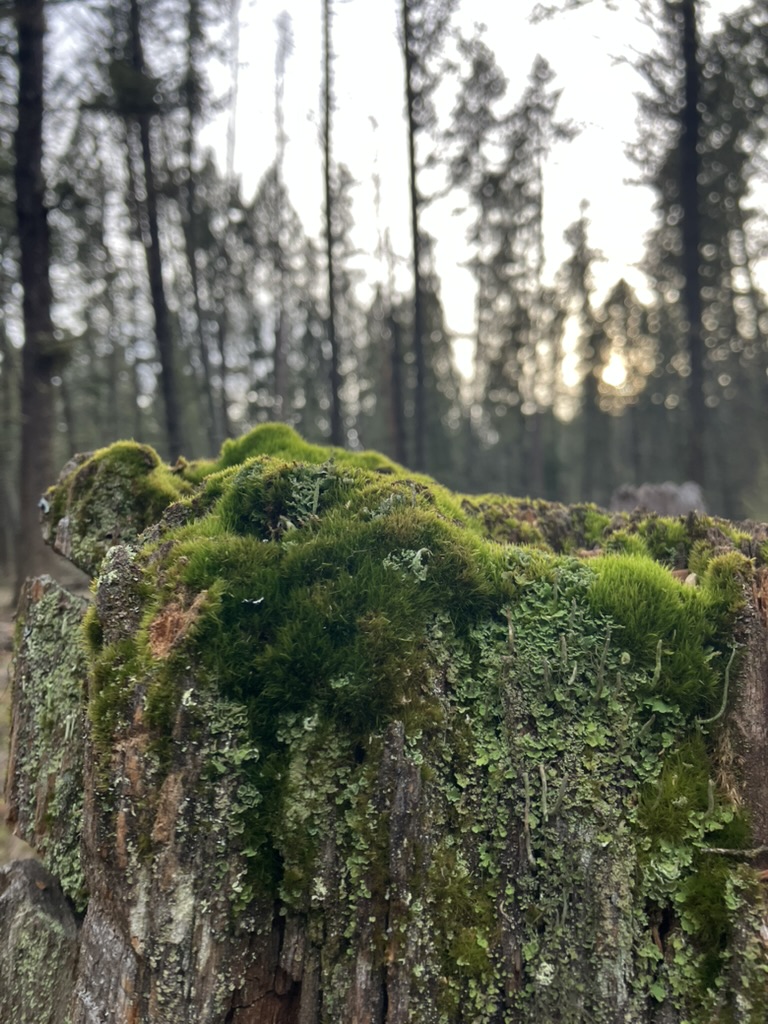
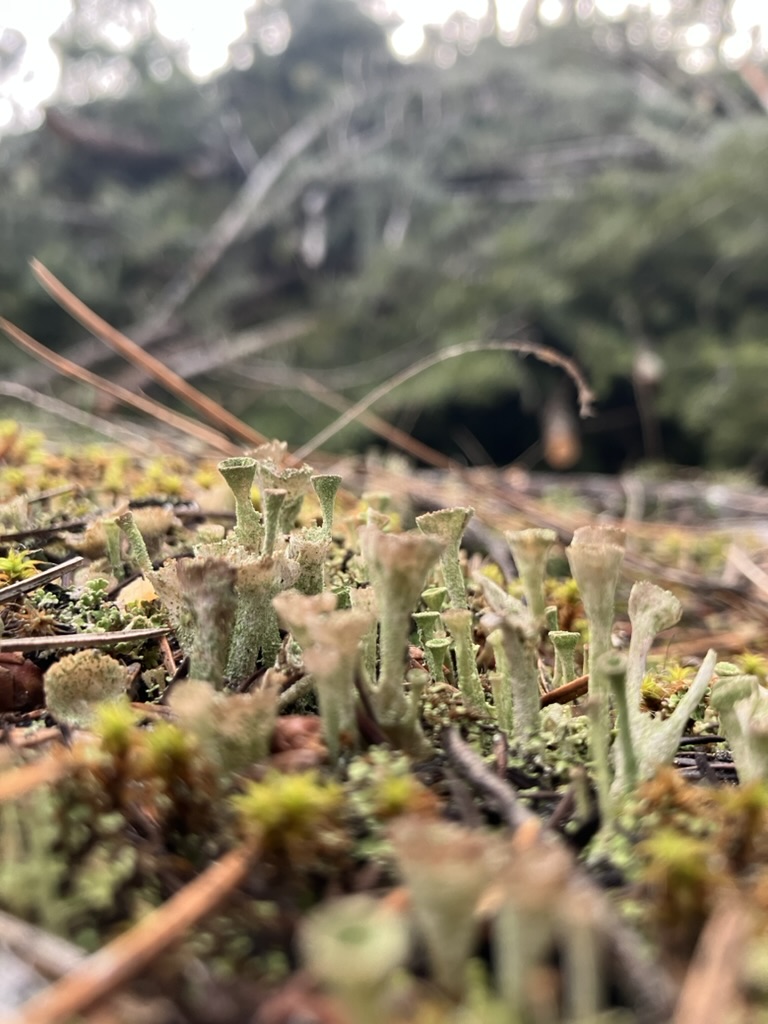
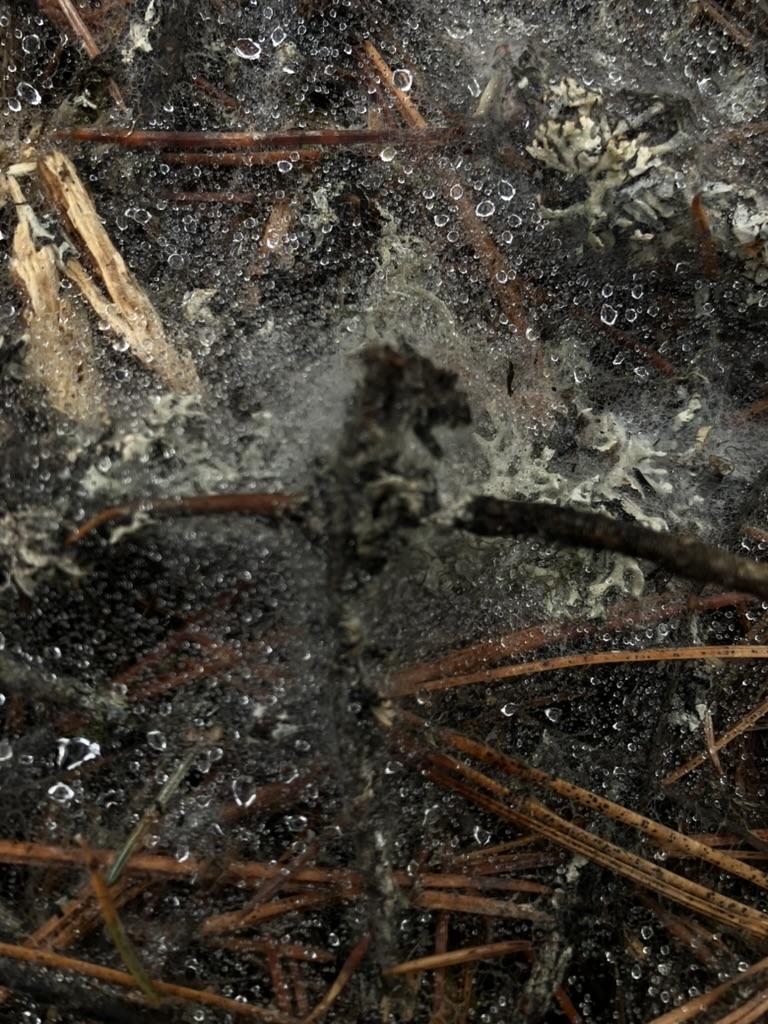
This week, spring is starting to emerge and I’m so excited. I love springtime, mostly because I’m fascinated by all the changes that happen outdoors in this time of year. On my way home from science class, I rode my bike through the nearby forest on the trail system back to my house. The next day, I returned and hopped off my bike to get close to the forest floor and see what new things were waking up from winter. I noticed so many wonderful things, like dewy webbing (maybe from spiders?) stretched across branches, and delicate circles of ice that floated over the dirt, balancing on pine needles. What caught my eye most was the mosses and lichens that covered so many logs and stumps, which are in the pictures above.
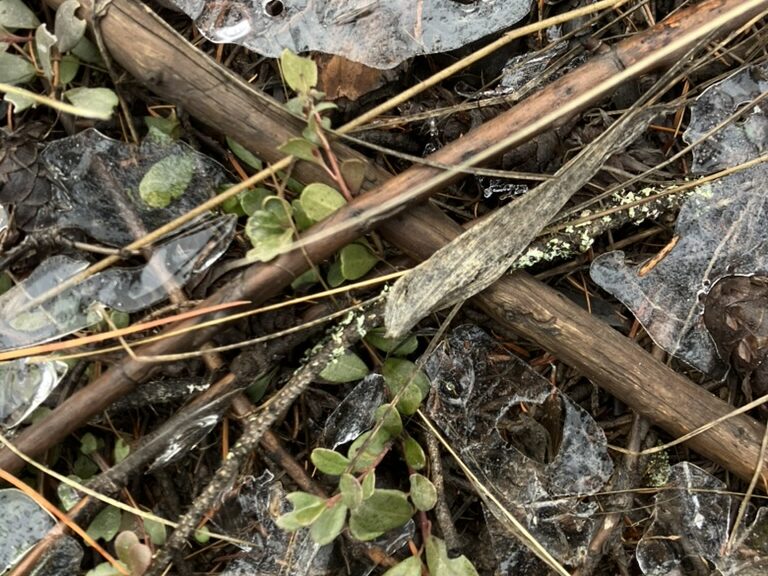
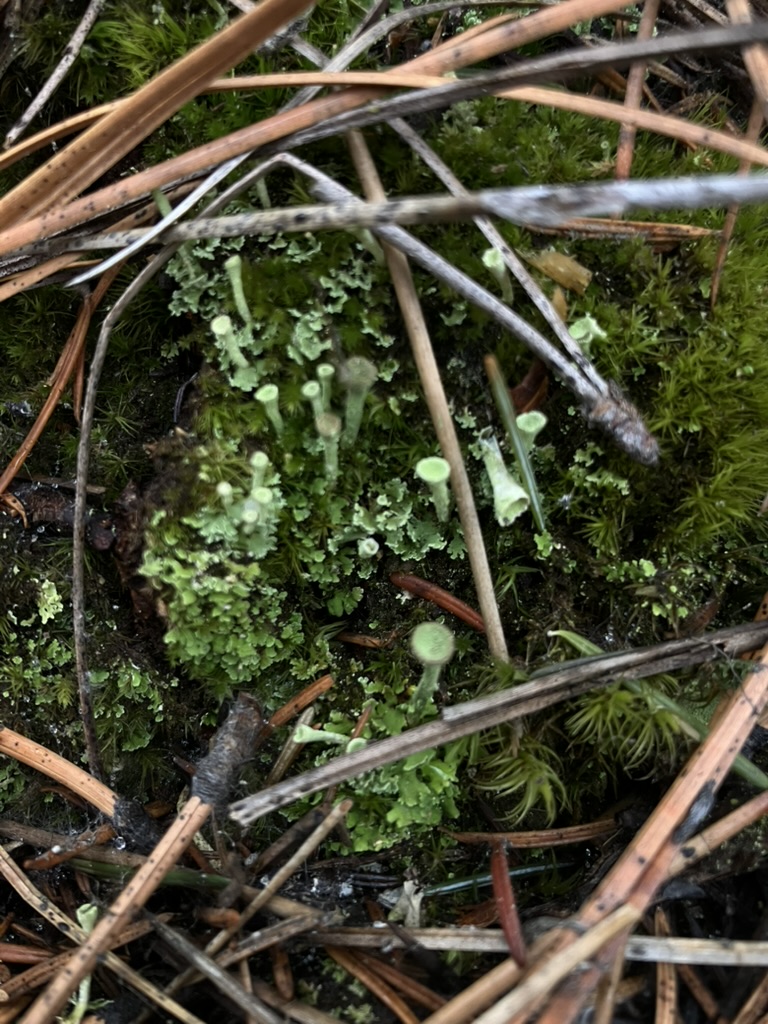
I spent half an hour crawling around in the dirt, just looking at all the mosses and lichens. People who were out walking their dogs may have wondered if I’d lost my marbles, but I’m sure if they saw how beautiful the forest floor was they’d understand. Something I noticed is that in many patches of soil or decaying wood, mosses and lichens grow together so closely that they can appear interwoven. Below are two photos that capture this:
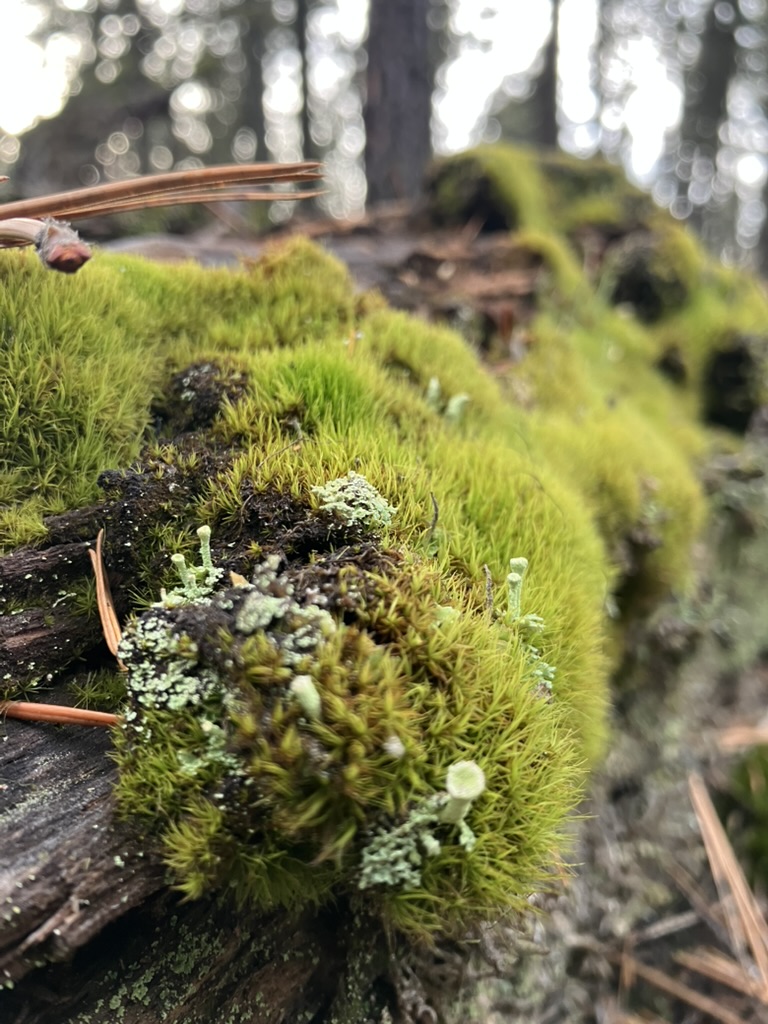
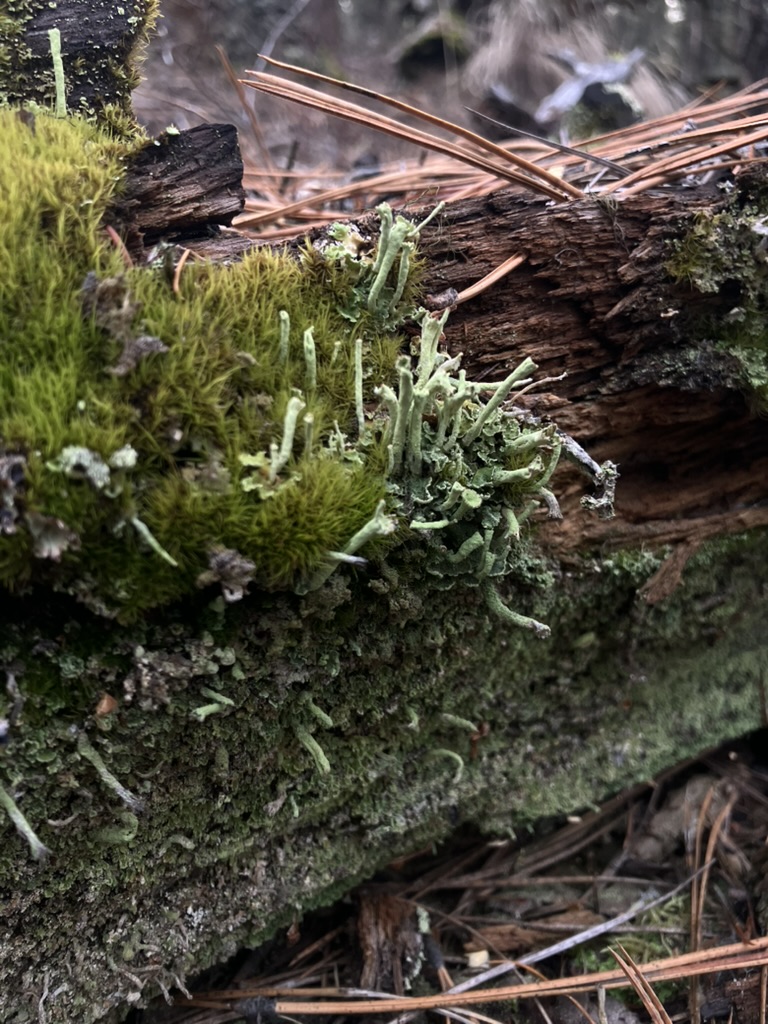
This made me think of the Braiding Sweetgrass chapter titled “Asters and Goldenrods” that our science class read so far back in the semester. In that chapter, Robin Wall Kimmerer describes her curiosity at the beauty of asters and goldenrods, and how they look even more beautiful when they grow together. When I saw moss and lichen growing together in this way, I thought “this is MY asters and goldenrods!”. I want to know why it is that mosses and lichens are best friends, that they are both signs of a healthy forest, that they can grow so closely together it appears as if they are one alien-looking plant. I do not know why this appears to be the case, but once I have less assignments on my plate I will look for an answer. Reading Braiding Sweetgrass again reminded me that western science, unfortunately, does not use words like “beautiful” or “best friends”, because those are too humanizing, not subjective enough. But I would like to challenge that!
In the BC science curriculum for grade three, “biodiversity in the local environment” (including the elaboration “characteristics of local plants, animals and fungi”) is included in the content. Could a characteristic of a moss be that it is a kind friend? That it leaves enough nutrients in the soil for lichens to grow so near it? As students at this age learn about aspects of life shared by and common to peoples and cultures in social studies, why don’t they learn about the friendships between all living things, human and otherwise? I am starting to think friendship is something that transcends subject areas, and I wonder if teaching it in this way could be beneficial for students as they relate to each other and the living world.