

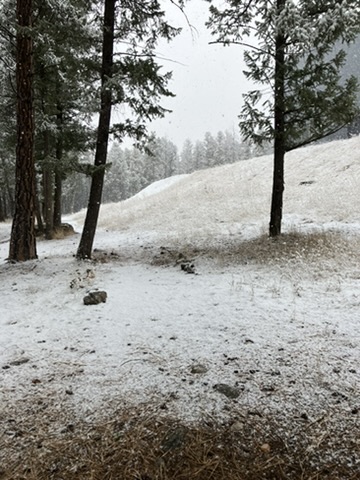
This week in science, we had a special guest who presented us with an simple question: why do some rocks along his forest walks have no snow on top, while the ground is covered in it? The class split into groups to carefully study photos of the guest’s observations, write out possible explanations, and compare our thinking with classmates. My group was so invested in untangling the mystery that we hardly wrote anything down at first- we were so deep in discussion. I mentioned that when I went for walks, I saw the road salt off people’s boots melt the ice at the trailheads. One classmate connected to her knowledge of hunting and farming, pointing out that if the area was a former human-made salt lick, that could influence the temperature at which snow was able to melt. We discussed sun, wind, albedo, lichen, and more before we were told that decaying radon within certain rocks was the culprit. How interesting!
I realized today that sometimes, students may not need an exciting or flashy activity to keep them interested. Sometimes all that is required is a good question, especially the sense that the answers one contributes are meaningful to the conversation. I am curious to see how well this translates to younger students though, as sometimes what they find interesting is quite different than us adults. In my upcoming practicum, I will be teaching a grade eight science class. We will be doing a unit that revolves around plate tectonics, and we will explore the phenomena that are produced by it. In this unit, I would like to test this idea out by presenting students with a phenomena produced by plate tectonics and asking them to do what we did: observe carefully, predict, and compare predictions before being given the scientifically agreed upon answer. I think this could be really fun for them, especially since they love to chat with one another, and I’m excited to see how it goes!