Category: AHA! Wonder journal

Wonder Journal #2: Art and Science

Image credit: Pinterest
Image credit: Anonymous EKTEP student

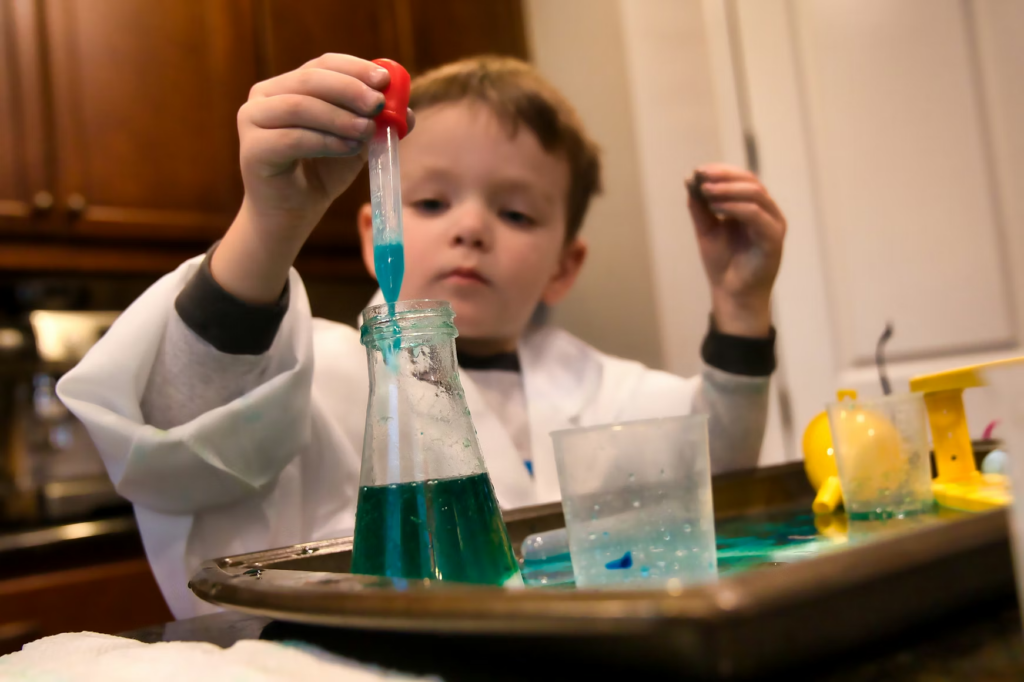
This week, our science class tried several fun and engaging activities involving colour mixing and surface tension. These activities were so fun, in fact, that I forgot to take pictures of them because I was so immersed! Thankfully my classmates did the job for me and were kind enough to share, so I can show you what we got up to. I will also be writing out simple instructions as I would like to bring the first activity into the classroom one day and will need reminders of the process.

Image credit: Anonymous EKTEP student

For the first activity, we mixed up three small cups of water and food dye to represent the primary colours, and had one pipette for each cup. We took a piece of cardboard with a blank white paper taped on top (to provide a clearer view of the colours that would be placed on top later), and covered it with wax paper which was taped to the underside of the cardboard. In groups of three, we experimented with placing droplets of colour water on top of the wax paper, as we were encouraged to do. Our instructor prompted us to investigate how many water drops could be put together in one “puddle” on the wax paper before it split into two. As we tried this, we naturally began mixing colours and created a rainbow using secondary colours, and soon were creating tertiary colours as well. This was a seemingly simple play activity, but my group organically started noticing many interesting phenomena on our own in the way the droplets behaved.

Some of our observations were:

  • Some of the colours mix more fluidly inside a two-colour droplet than others
  • Despite having equal amounts of dye in each cup, some of the coloured droplets are able to let more light pass through than others
  • Even the smallest bump or fold in the wax paper will dramatically shape the puddles of water that are created
  • Individual droplets can often stay put, while bigger puddles flow more quickly to the lowest point
  • The yellow dyed water has a very fluorescent quality, unlike any of the other colours
  • The wax paper mostly resists the water, but it can still be stained by the dyes in the droplets
  • Droplets that are placed close enough together will combine into one bigger droplet
  • Droplets and puddles always have a rounded shape on top and on the edges where the water meets the surface
Image credit: Anonymous EKTEP student

I was pleasantly surprised at how many observations about the properties of water and of colour happened in those few unstructured minutes of play. The most exciting thing this time reminded me of was how intertwined art and science are. I have always loved both, but rarely have had teachers recognize what the two “separate disciplines” have in common. When I reflect on the list above of observations, I can not tell you which ones are “artistic” or “scientific”: they are all fully both. When I think about the quote from Isaac Asimov at the top of the post, it reminds me of a podcast episode (yes, another podcast) I was listening to yesterday from NDN Science Show (created by Annie Sorrell and Loga Fixico) about the differences and the overlaps between Indigenous approaches to science and western approaches to science. Stay tuned for the next post, where I will tell you more about that!

Wonder Journal #1: Exploring Properties of Matter

Image credit: Unsplash

When I was a little kid, I had the privilege of a stay-at-home mum who was very crafty. She would set up something called “science day” for my sisters and I every once in a while, and we absolutely loved it. “Science days” looked something like this: a kitchen floor covered in an old bedsheet, topped with a box of food dyes, baking soda, vinegar, straws, dish soap, cornstarch, a very large orange plastic bowl, some baking trays, and spoons. We would stir, squish, and spill until we had created some new toxic waste for my mum to clean up, but it really was meaningful. I still remember the perplexing texture of cornstarch with water, the sizzling sound of baking soda and vinegar, and the way one drop of red would turn dough pink. Because I had such rich experiences where I was able to freely explore, I was disappointed and confused when I did “real science” in school, and exploring (for the most part) was no longer allowed.
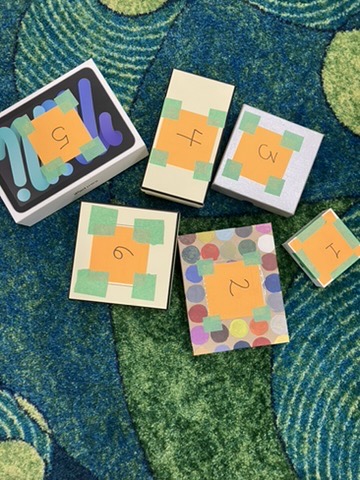
Image taken by myself, 2025

This is why I was thrilled when my elementary science instructor pulled out a set of mysterious boxes for us to investigate, as our students would, using our senses. The goal was to make predictions about the contents, the only rule was “don’t open the box”. I had almost forgotten that “real science” could be playful, imaginative, and creative. On top of that, I think this exercise perfectly embodies universal design for learning. Any student could participate in making predictions, because the task is so open, there are as many ways to study the object as one could dream up. Throughout my class, I noticed people shaking, sliding, weighing, listening to, and even smelling the boxes to collect data on the contents- these strategies probably just scratch the surface of what kids could come up with if they were presented with this activity.

When I came home from class, I compared this activity against the BC science curriculum, as I was wondering what age range it would be most applicable to. To me it seems most relevant in kindergarten, when matter is first being explored, but I can imagine it being adapted across several grades when studying Earth sciences and botany. For example, I could see the boxes being filled with a variety of substrates, such as sand, shale, clay, peat, soil, and silt, and students devising tests to determine their contents. I will be teaching Earth sciences this spring during practicum, and am considering how I can find similarly hands-on and open tasks where students can let their natural curiosity guide them. My childhood self that loved “science days” so much would be thrilled to see science instruction moving in this exciting new direction.

Links: https://curriculum.gov.bc.ca/curriculum/science/k/core