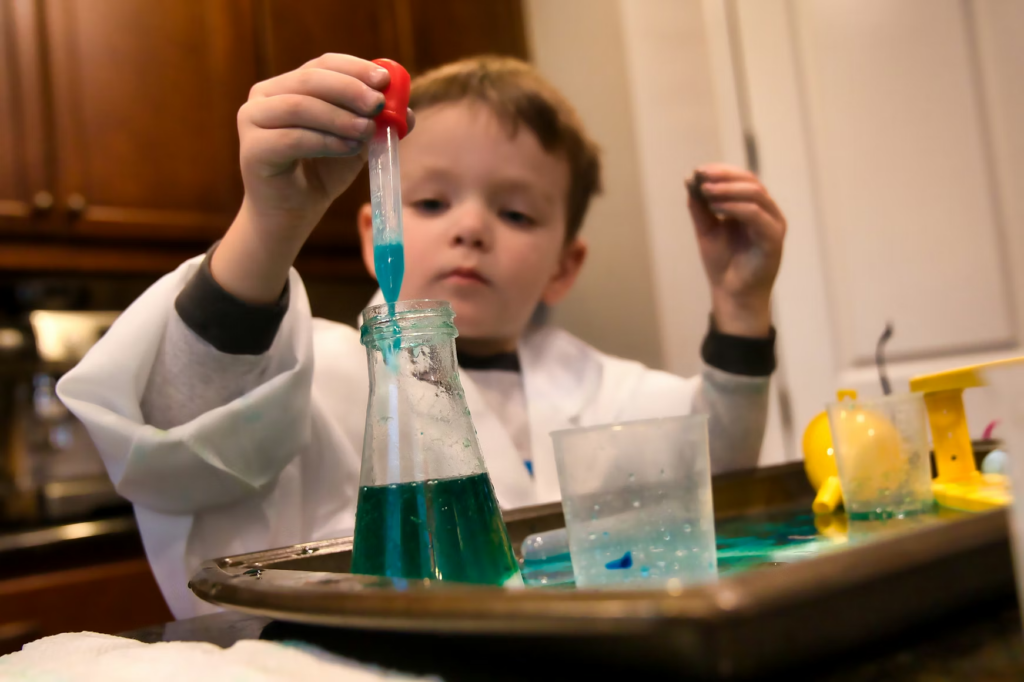
When I was a little kid, I had the privilege of a stay-at-home mum who was very crafty. She would set up something called “science day” for my sisters and I every once in a while, and we absolutely loved it. “Science days” looked something like this: a kitchen floor covered in an old bedsheet, topped with a box of food dyes, baking soda, vinegar, straws, dish soap, cornstarch, a very large orange plastic bowl, some baking trays, and spoons. We would stir, squish, and spill until we had created some new toxic waste for my mum to clean up, but it really was meaningful. I still remember the perplexing texture of cornstarch with water, the sizzling sound of baking soda and vinegar, and the way one drop of red would turn dough pink. Because I had such rich experiences where I was able to freely explore, I was disappointed and confused when I did “real science” in school, and exploring (for the most part) was no longer allowed.
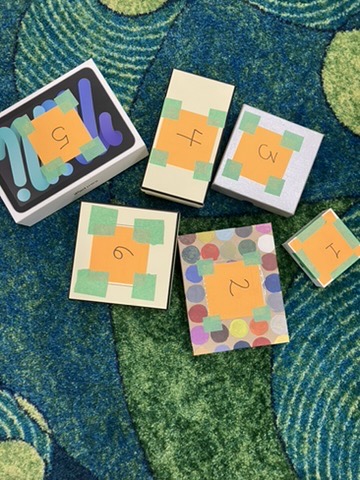
This is why I was thrilled when my elementary science instructor pulled out a set of mysterious boxes for us to investigate, as our students would, using our senses. The goal was to make predictions about the contents, the only rule was “don’t open the box”. I had almost forgotten that “real science” could be playful, imaginative, and creative. On top of that, I think this exercise perfectly embodies universal design for learning. Any student could participate in making predictions, because the task is so open, there are as many ways to study the object as one could dream up. Throughout my class, I noticed people shaking, sliding, weighing, listening to, and even smelling the boxes to collect data on the contents- these strategies probably just scratch the surface of what kids could come up with if they were presented with this activity.
When I came home from class, I compared this activity against the BC science curriculum, as I was wondering what age range it would be most applicable to. To me it seems most relevant in kindergarten, when matter is first being explored, but I can imagine it being adapted across several grades when studying Earth sciences and botany. For example, I could see the boxes being filled with a variety of substrates, such as sand, shale, clay, peat, soil, and silt, and students devising tests to determine their contents. I will be teaching Earth sciences this spring during practicum, and am considering how I can find similarly hands-on and open tasks where students can let their natural curiosity guide them. My childhood self that loved “science days” so much would be thrilled to see science instruction moving in this exciting new direction.
Links: https://curriculum.gov.bc.ca/curriculum/science/k/core